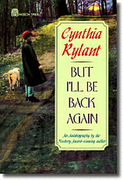
by Cynthia Rylant
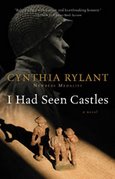
“I Had Seen Castles” is the story of a young man, John Dante, who optimistically goes to war with dreams of glory and righteousness and returns with reality and nightmares. His attitude is familiar. I have read a number of books that had characters who felt the same way. Each war begins with the “Rah-rah-rah” attitude reminiscent of cheerleaders at a local high school football game. Everything is black and white. We are good. They are bad. We are right. They are wrong. Etc, etc, etc…
I feel anger when I read books like this. “Bull Run”, “Gone With The Wind”, “Platoon”, and many more stories all start out the same. They touch the patriotic streak we all seem to have and crucify anyone who speaks out against war as unpatriotic. The older I get, the angrier I become at the patriotic rhetoric. The truth always seems many wounded bodies away. Cynthia Rylant’s writing ability made me experience enough anger to keep me awake for hours. She is a true master at her craft.
Fifty years after the war, John Dante wrote his story of a young boy, himself, off to World War II. The boy’s mother took a job in a factory to try to shorten the war. The boy speaks of the ten-hour days she puts in, day after day, coming home exhausted. John acknowledges that she does all this to save him from going to war, but his only concern is his embarrassment at seeing her wear pants. This is the real enemy. Young people, so self-absorbed, cannot see beyond their own wants and needs. His mother sacrifices her life to save his, and he only sees what she wears. John blindly goes off to war a haze of patriotism to return stunned and empty from the terrors he had seen.
The most regrettable thing about “I Had Seen Castles” is that once that John realizes that Ginny, his first love, was right in questioning the value of war, he never tries to find her again. He is so wrapped up in himself that he cannot or will not look for her. How very sad.
Cynthia Rylant does a tremendous job pushing all the right emotional buttons. She is right to reserve this story for older students as younger students would not understand the release of lovemaking and the fighting to save your fellow soldiers concepts.
Wednesday, April 11, 2007

Bull Run
by Paul Fleischman
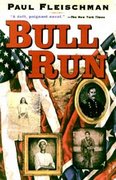
“Bull Run” reminded me of “Seedfolks,” also written by Paul Fleischman. Each chapter told the story of one person’s thoughts and actions prior to, during, and after the battle of Bull Run. The chapters were surprising short, only a page or two each. Each person’s story did not completely unfold in the chapter. The author told pieces of the story for each character moving the story along chronologically.
Slaves, women, generals, colonels, young boys, a doctor, and a stable lad all had roles to play in “Bull Run”. The characters I identified with the most were the doctor, William Rye, and the stable lad, Shem Suggs. The doctor went with the army knowing that many soldiers would be wounded and in need of medical care. He had no delusions of glory about war as the doctor already had combat experience. The stable lad joined the army so one day he could own a horse. Some folks took picnic lunches and champagne to watch the battle as if it were a play. The disconnect with reality is startling; however, history documents that people really did have picnics as they watched the battle. All the other characters were slaves looking for freedom or delusional characters dreaming of glory and fast victory.
Shem Suggs and Dr. William Rye were the most admirable people in the story. Shem buried the dead horses and cared for the live ones after the battle. The doctor tried to save lives regardless of their affiliation.
Dr. Rye referred to the rejoicing and celebrating of the Southern victory the asked, “A victory? Indeed it was, for Death upon his pale horse.” Later that very day, I watched a news report about the “victory” in Iraq. Saddam Hussein’s statute was being pulled down as people rejoiced in the streets. Four years later and thousands dead in Iraq, we can also ask, “A victory? Indeed it was, for Death upon his pale horse.” How odd to hear a four-year anniversary of the “victory” in Iraq just as I read this passage in “Bull Run,” the first battle of a bloody four-year war from our past.
Paul Fleischman’s word craft in “Bull Run” is impressive. In one simile, a slave’s smile was described as, “…the slimmest of smiles fled his lips, like a snake disappearing down a hole.” This perfectly describes the smiles that some of my “would be” rascally students give me on occasion. The reader could see the facial expressions of some of the characters as the author described them.
I admit that I had to keep going back in the book to remember who the characters were. A graphic organizer would help clarify and separate the characters if a teacher chose to have students read “Bull Run” in the classroom. “Bull Run” would be an excellent novel to read along with Virginia Studies VS7, the Civil War.
Lesson plans can be found at:
http://www.sdcoe.k12.ca.us/score/bull/bulltg.html
“Bull Run” reminded me of “Seedfolks,” also written by Paul Fleischman. Each chapter told the story of one person’s thoughts and actions prior to, during, and after the battle of Bull Run. The chapters were surprising short, only a page or two each. Each person’s story did not completely unfold in the chapter. The author told pieces of the story for each character moving the story along chronologically.
Slaves, women, generals, colonels, young boys, a doctor, and a stable lad all had roles to play in “Bull Run”. The characters I identified with the most were the doctor, William Rye, and the stable lad, Shem Suggs. The doctor went with the army knowing that many soldiers would be wounded and in need of medical care. He had no delusions of glory about war as the doctor already had combat experience. The stable lad joined the army so one day he could own a horse. Some folks took picnic lunches and champagne to watch the battle as if it were a play. The disconnect with reality is startling; however, history documents that people really did have picnics as they watched the battle. All the other characters were slaves looking for freedom or delusional characters dreaming of glory and fast victory.
Shem Suggs and Dr. William Rye were the most admirable people in the story. Shem buried the dead horses and cared for the live ones after the battle. The doctor tried to save lives regardless of their affiliation.
Dr. Rye referred to the rejoicing and celebrating of the Southern victory the asked, “A victory? Indeed it was, for Death upon his pale horse.” Later that very day, I watched a news report about the “victory” in Iraq. Saddam Hussein’s statute was being pulled down as people rejoiced in the streets. Four years later and thousands dead in Iraq, we can also ask, “A victory? Indeed it was, for Death upon his pale horse.” How odd to hear a four-year anniversary of the “victory” in Iraq just as I read this passage in “Bull Run,” the first battle of a bloody four-year war from our past.
Paul Fleischman’s word craft in “Bull Run” is impressive. In one simile, a slave’s smile was described as, “…the slimmest of smiles fled his lips, like a snake disappearing down a hole.” This perfectly describes the smiles that some of my “would be” rascally students give me on occasion. The reader could see the facial expressions of some of the characters as the author described them.
I admit that I had to keep going back in the book to remember who the characters were. A graphic organizer would help clarify and separate the characters if a teacher chose to have students read “Bull Run” in the classroom. “Bull Run” would be an excellent novel to read along with Virginia Studies VS7, the Civil War.
Lesson plans can be found at:
http://www.sdcoe.k12.ca.us/score/bull/bulltg.html
Monday, April 9, 2007
The Watsons Go to Birminham
by Christopher Paul Curtis
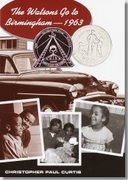
The ‘weird’ Watsons, as they call themselves, are close-knit family of African American descent who live in Michigan. This is a family who enjoy each other. Dad is a fast-talking, fun loving clown who giggles and ‘performs’ for his wife and children. The mother is more serious but lets a giggle and a smile escape once in a while. Three children bless the Watson’s home: Byron, Kenny, and Joey. The story is told from Kenny’s point of view.
Byron, the older boy, gets into too much trouble at home and at school, although the trouble consists of fairly insignificant acts of juvenile delinquency. Mother and Father Watson decided that Byron needed to spend the summer with his fierce, no nonsense grandmother in Alabama. Up to this point, Byron’s behavior has gone uncontrolled, as Byron knows his parents love him and will protect him no matter how awful he acts. His grandmother is surrounded by stories of fierceness, and she lives in Alabama, a state under siege with racial discord.
After a riotous preparation involving a record player and a fifteen-hour nonstop trip in a rickety car nicknamed the Brown Bomber, the family arrives in Birmingham, Alabama. Byron changes almost overnight stating that he ‘would not be responsible for that old woman’s death’.
The story loses it jovial nature and becomes serious when the youngest child, Joey goes to church. The church is bombed, and Kenny runs to the church, enters, and sees dead little girls on the ground. He sees a black shoe and pulls it towards him thinking his little sister is dead. Kenny and the entire family struggles with racism and death in ways they were never exposed to in Michigan. Kenny struggles with an emotional crisis that almost destroys him, but Byron pulls him through. This family’s struggle is a metaphor for the struggles all African American families faced from after Reconstruction until well after the Civil Rights Movement.
Lesson plans at:
http://www.webenglishteacher.com/curtis.html
The ‘weird’ Watsons, as they call themselves, are close-knit family of African American descent who live in Michigan. This is a family who enjoy each other. Dad is a fast-talking, fun loving clown who giggles and ‘performs’ for his wife and children. The mother is more serious but lets a giggle and a smile escape once in a while. Three children bless the Watson’s home: Byron, Kenny, and Joey. The story is told from Kenny’s point of view.
Byron, the older boy, gets into too much trouble at home and at school, although the trouble consists of fairly insignificant acts of juvenile delinquency. Mother and Father Watson decided that Byron needed to spend the summer with his fierce, no nonsense grandmother in Alabama. Up to this point, Byron’s behavior has gone uncontrolled, as Byron knows his parents love him and will protect him no matter how awful he acts. His grandmother is surrounded by stories of fierceness, and she lives in Alabama, a state under siege with racial discord.
After a riotous preparation involving a record player and a fifteen-hour nonstop trip in a rickety car nicknamed the Brown Bomber, the family arrives in Birmingham, Alabama. Byron changes almost overnight stating that he ‘would not be responsible for that old woman’s death’.
The story loses it jovial nature and becomes serious when the youngest child, Joey goes to church. The church is bombed, and Kenny runs to the church, enters, and sees dead little girls on the ground. He sees a black shoe and pulls it towards him thinking his little sister is dead. Kenny and the entire family struggles with racism and death in ways they were never exposed to in Michigan. Kenny struggles with an emotional crisis that almost destroys him, but Byron pulls him through. This family’s struggle is a metaphor for the struggles all African American families faced from after Reconstruction until well after the Civil Rights Movement.
Lesson plans at:
http://www.webenglishteacher.com/curtis.html
Mole Music
by David McPhail
Mole Music has so many levels of interest that it is difficult to know where to start. Carolyn and I did our picture book presentation on Mole Music and found new aspects of the writing craft or the illustrator’s craft every time we read the story.
The over all theme of Mole Music is that music enriches, comforts, soothes, and enlivens our lives. A simple, lonely mole learns to play the violin. With quiet tenacity, the mole practices over years to be able to play the violin beautifully. I wish that I had the persistence and drive of that little mole! Unknown to the mole, his music affects the people and animals above ground. Single handedly, the mole brings harmony to his little patch of earth, above and below ground.
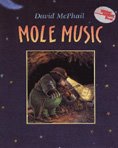
The page can be divided horizontally to show two different stories taking place: one above ground and one below ground. The stories are much bleaker when viewed separately, but the illustrator blends the two stories to demonstrate growth of the mole’s musical talent, growth of a tree, and a growth of harmony amongst the people living, working, and fighting above ground.
The artwork tells much of the story without words. You can see the tree growing and the ground eroding, but this is not mentioned in words. You can see crops being harvested and people gathered under the tree to rest, but this isn’t mentioned in words, either. Most of the story is told in the art, not the words although the written words explain mole’s thoughts and actions. The mole starts, remains, and ends the story quite alone. Of all the characters, the mole is the only one isolated so words are needed to tell his feelings.
This is the first picture book that I have every analyzed in depth. I realize that I have simply not paid attention to picture books as a reading source for older students, but I have begun to correct that error in my classroom.
Lesson plan ideas at:
http://www.tlpeace.org.au/stories/molemusic.htm
Mole Music has so many levels of interest that it is difficult to know where to start. Carolyn and I did our picture book presentation on Mole Music and found new aspects of the writing craft or the illustrator’s craft every time we read the story.
The over all theme of Mole Music is that music enriches, comforts, soothes, and enlivens our lives. A simple, lonely mole learns to play the violin. With quiet tenacity, the mole practices over years to be able to play the violin beautifully. I wish that I had the persistence and drive of that little mole! Unknown to the mole, his music affects the people and animals above ground. Single handedly, the mole brings harmony to his little patch of earth, above and below ground.
The page can be divided horizontally to show two different stories taking place: one above ground and one below ground. The stories are much bleaker when viewed separately, but the illustrator blends the two stories to demonstrate growth of the mole’s musical talent, growth of a tree, and a growth of harmony amongst the people living, working, and fighting above ground.
The artwork tells much of the story without words. You can see the tree growing and the ground eroding, but this is not mentioned in words. You can see crops being harvested and people gathered under the tree to rest, but this isn’t mentioned in words, either. Most of the story is told in the art, not the words although the written words explain mole’s thoughts and actions. The mole starts, remains, and ends the story quite alone. Of all the characters, the mole is the only one isolated so words are needed to tell his feelings.
This is the first picture book that I have every analyzed in depth. I realize that I have simply not paid attention to picture books as a reading source for older students, but I have begun to correct that error in my classroom.
Lesson plan ideas at:
http://www.tlpeace.org.au/stories/molemusic.htm
Seedfolks
by Paul Fleischman
Paul Fleischman is the son of Sid Fleischman, also a Newbery winner. Having read books by both authors, I recognized similarities in style, and now I know why.
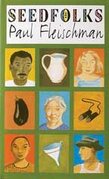
Seedfolks is a story about a community garden. The garden was started by a young Vietnamese girl to honor her deceased father who had been a gardener. The only place to plant anything was an undeveloped lot filled with junk. The girl’s efforts were noticed, and slowly people planted small plots of ground and cleared the junk away.
Each chapter focuses upon one person, and why that person decided to grow a garden. Some of the people plant to sell the crops, others to honor a loved one, court a girlfriend, to escape loneliness, and many other reasons. Each reason takes the person to the garden where interaction with other gardeners takes place. The garden becomes a meeting place and grows into a community. People who ignored or mistreated each other become friends or at least tolerant. As the garden grows, a sense of community grows, too.
The essence of Seedfolks isn’t about plants growing; it’s about people finding that they have something in common and building relationships from that commonality.
Lesson plans and questions with answers from the author are at:
http://www.harperchildrens.com/hch/parents/teachingguides/fleischman.pdf
Paul Fleischman is the son of Sid Fleischman, also a Newbery winner. Having read books by both authors, I recognized similarities in style, and now I know why.
Seedfolks is a story about a community garden. The garden was started by a young Vietnamese girl to honor her deceased father who had been a gardener. The only place to plant anything was an undeveloped lot filled with junk. The girl’s efforts were noticed, and slowly people planted small plots of ground and cleared the junk away.
Each chapter focuses upon one person, and why that person decided to grow a garden. Some of the people plant to sell the crops, others to honor a loved one, court a girlfriend, to escape loneliness, and many other reasons. Each reason takes the person to the garden where interaction with other gardeners takes place. The garden becomes a meeting place and grows into a community. People who ignored or mistreated each other become friends or at least tolerant. As the garden grows, a sense of community grows, too.
The essence of Seedfolks isn’t about plants growing; it’s about people finding that they have something in common and building relationships from that commonality.
Lesson plans and questions with answers from the author are at:
http://www.harperchildrens.com/hch/parents/teachingguides/fleischman.pdf
Thursday, April 5, 2007
Charlotte's Web
by E.B. White
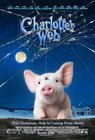
How many children’s classic stories have been made into a movie, not once but three times? “Charlotte’s Web” is a fantasy written to delight animal lovers and children everywhere. Underneath the joy invoked by talking animals and escapes from being made into sausage, a difficult concept is explored.
Animals are raised, slaughtered, and eaten every day, and we think very little about it. I have watched children snarf down hamburgers and hot dogs without any concern. Yet, when an animal is given a name, attitudes change. Suddenly, the animal is more than just part of the next sandwich. I feel qualms about eating pork every morning as truck after truck loaded with pigs pass me on their way to be slaughtered at the local packing plant. I hate the way that the pigs are all loaded on top of each other, unable to move, on their way to death. The process seems incredibly cruel, but it is just a fact of life.
I reread “Charlotte’s Web” every year as an escape from reality. Wilbur, the little pig headed towards being slaughtered and eaten, is saved by a child, a rat, and a spider. The real champion was Charlotte, the spider who saved Wilbur by creating ‘miracle’ messages in her spider web.
A child’s life can be filled with wondrous things like a kind spider, Charlotte, and talking rats with attitude like Templeton. Cute little pigs can be pets like Wilbur, and mother sheep can share kindness with animals of other species. Adults can change their minds and show kindness to children and animals. “Charlotte’s Web” is a fantasy of kindness that children can read to escape from their less than kind environments.
Lesson plans at:
http://www.murrieta.k12.ca.us/alta/dfuller/charlotte/index.html
How many children’s classic stories have been made into a movie, not once but three times? “Charlotte’s Web” is a fantasy written to delight animal lovers and children everywhere. Underneath the joy invoked by talking animals and escapes from being made into sausage, a difficult concept is explored.
Animals are raised, slaughtered, and eaten every day, and we think very little about it. I have watched children snarf down hamburgers and hot dogs without any concern. Yet, when an animal is given a name, attitudes change. Suddenly, the animal is more than just part of the next sandwich. I feel qualms about eating pork every morning as truck after truck loaded with pigs pass me on their way to be slaughtered at the local packing plant. I hate the way that the pigs are all loaded on top of each other, unable to move, on their way to death. The process seems incredibly cruel, but it is just a fact of life.
I reread “Charlotte’s Web” every year as an escape from reality. Wilbur, the little pig headed towards being slaughtered and eaten, is saved by a child, a rat, and a spider. The real champion was Charlotte, the spider who saved Wilbur by creating ‘miracle’ messages in her spider web.
A child’s life can be filled with wondrous things like a kind spider, Charlotte, and talking rats with attitude like Templeton. Cute little pigs can be pets like Wilbur, and mother sheep can share kindness with animals of other species. Adults can change their minds and show kindness to children and animals. “Charlotte’s Web” is a fantasy of kindness that children can read to escape from their less than kind environments.
Lesson plans at:
http://www.murrieta.k12.ca.us/alta/dfuller/charlotte/index.html
Wednesday, April 4, 2007
The Whipping Boy
by Sid Fleischman
My students were outraged when they read that when the Prince was naughty, another boy was spanked in his place. They quickly grasped that the Prince could misbehave with impunity. Misbehaving was the Prince’s favorite past time. Finally, the Prince became bored with his game of misbehaving and watching Jemmy, his whipping boy, being beaten in his stead.
The Prince devised a plan to run away and forced Jemmy to go with him. At this point, my students were divided. One group of students felt strongly that Jemmy should abandon the Prince to his fate. A smaller group believed that Jemmy should help the Prince survive even though the Prince may not deserve help.
The Prince and Jemmy were kidnapped and ill-treated by a band of brigands. They escaped, suffered from hunger and other hardships, and the Prince received a harsh lesson in medieval life. Naturally, the Prince had a change of heart and mended his ways.
In spite of the predictability of the outcome of “The Whipping Boy”, the story is engrossing, well written, and won the Newbery Medal. The “Whipping Boy” reminds me of Mark Twains’ “The Prince and the Pauper”. Although in Twains’ story, the poor boy gets to stay behind at the castle and enjoy the Prince’s life instead of going with the Prince on his adventure.
Whipping boys were actually used during medieval times for princes and princesses. The child being whipped was rarely a commoner, though. Often the child chosen as a whipping boy or girl would be the son or daughter of minor royalty as the position was considered to be an honor.
Sid Fleischman is the father of Paul Fleischman, also a Newbery winning author.
Lesson plans can be found at:
http://home.olemiss.edu/~adrobb/lesson10.htm
My students were outraged when they read that when the Prince was naughty, another boy was spanked in his place. They quickly grasped that the Prince could misbehave with impunity. Misbehaving was the Prince’s favorite past time. Finally, the Prince became bored with his game of misbehaving and watching Jemmy, his whipping boy, being beaten in his stead.
The Prince devised a plan to run away and forced Jemmy to go with him. At this point, my students were divided. One group of students felt strongly that Jemmy should abandon the Prince to his fate. A smaller group believed that Jemmy should help the Prince survive even though the Prince may not deserve help.
The Prince and Jemmy were kidnapped and ill-treated by a band of brigands. They escaped, suffered from hunger and other hardships, and the Prince received a harsh lesson in medieval life. Naturally, the Prince had a change of heart and mended his ways.
In spite of the predictability of the outcome of “The Whipping Boy”, the story is engrossing, well written, and won the Newbery Medal. The “Whipping Boy” reminds me of Mark Twains’ “The Prince and the Pauper”. Although in Twains’ story, the poor boy gets to stay behind at the castle and enjoy the Prince’s life instead of going with the Prince on his adventure.
Whipping boys were actually used during medieval times for princes and princesses. The child being whipped was rarely a commoner, though. Often the child chosen as a whipping boy or girl would be the son or daughter of minor royalty as the position was considered to be an honor.
Sid Fleischman is the father of Paul Fleischman, also a Newbery winning author.
Lesson plans can be found at:
http://home.olemiss.edu/~adrobb/lesson10.htm
Subscribe to:
Posts (Atom)